
 |
Floor Plan |  |

The Dennis Wheatley 'Museum' - Researching the Occult
Postscript - a revised date for when DW wrote 'The Devil Rides Out', and why it matters
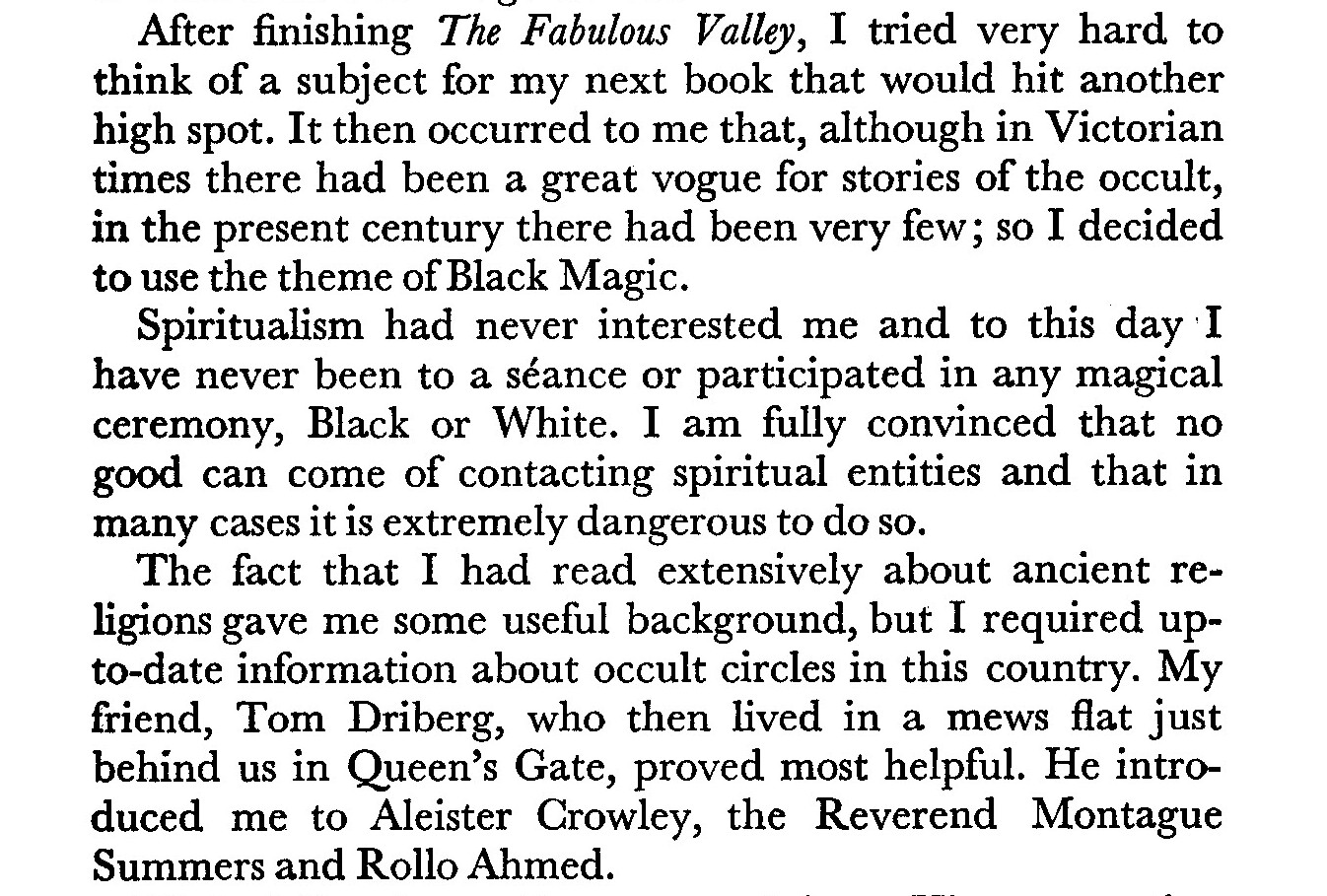
DW’s account of the writing of ‘The Devil Rides Out’ in ‘Drink and Ink’
Click on the image to enlarge
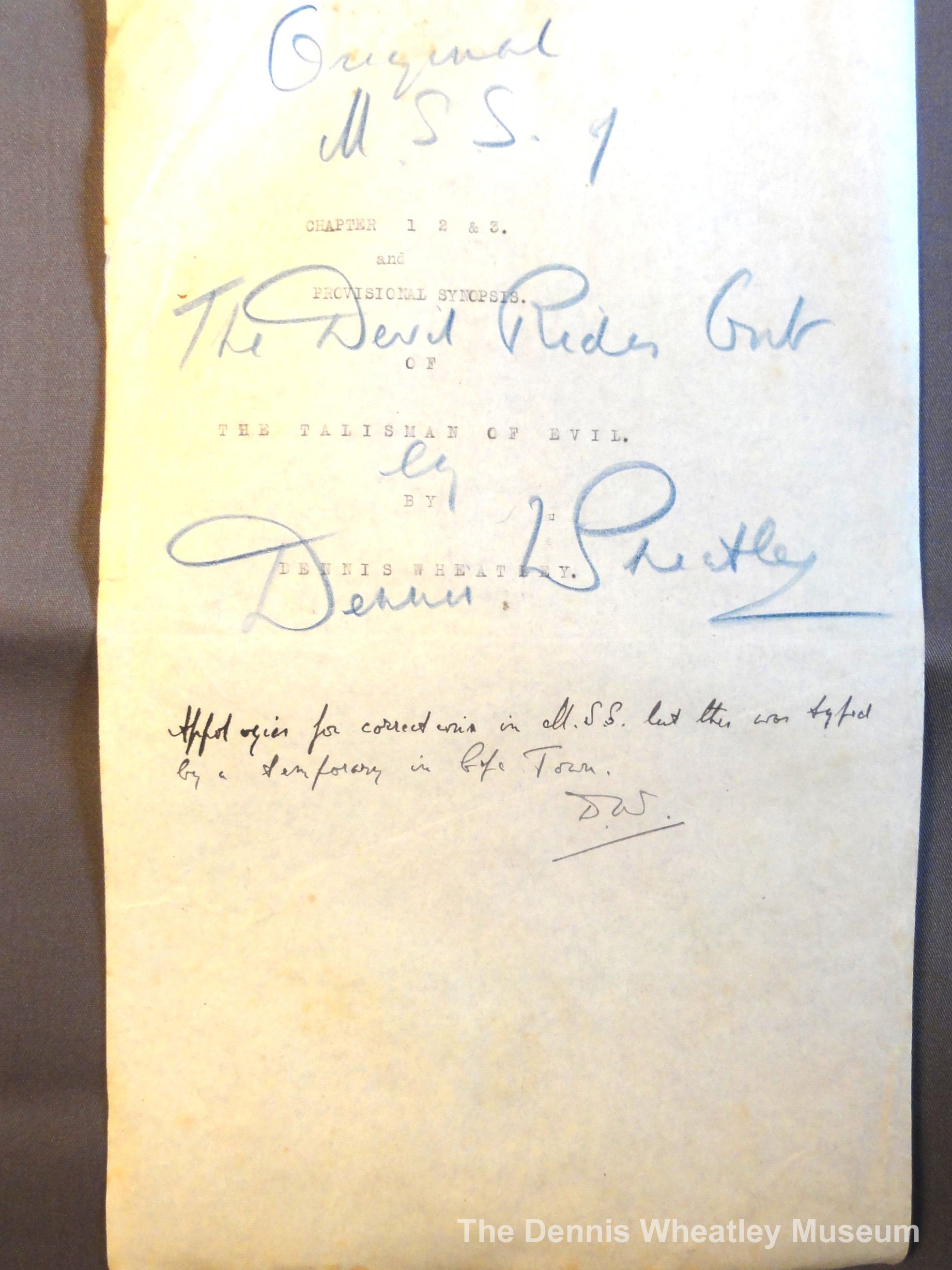
The opening page of the typescript, with its important annotation in ink
Click on the image to enlarge
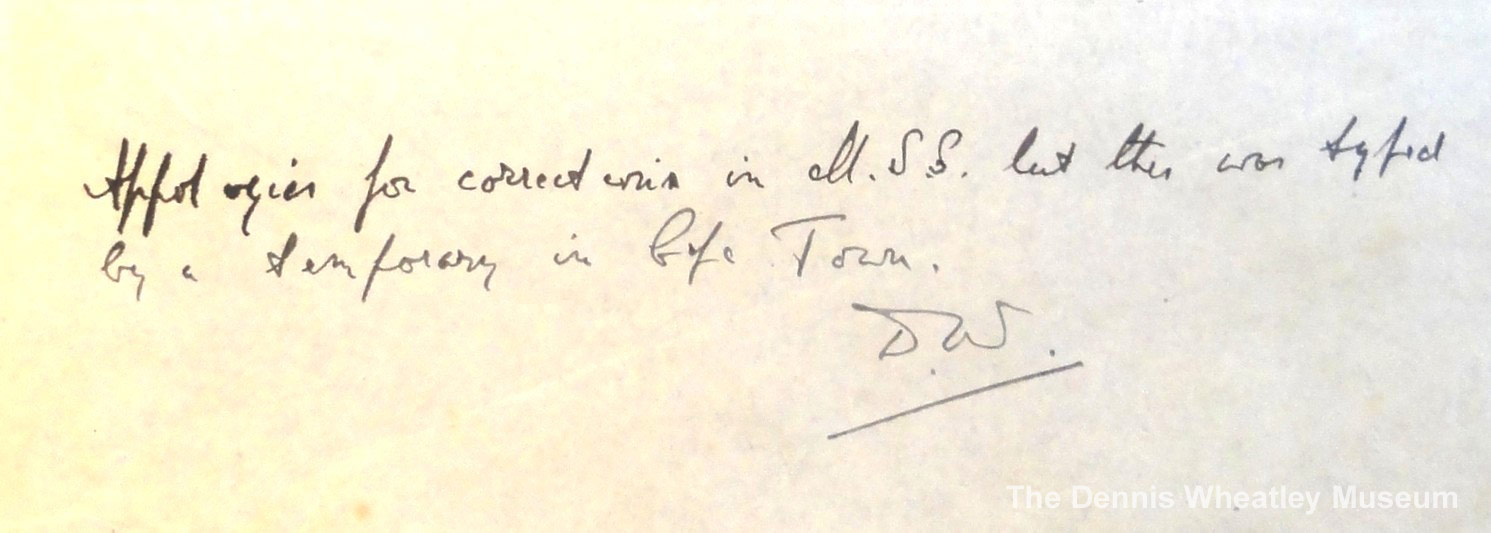
The annotation enlarged
Click on the image to enlarge
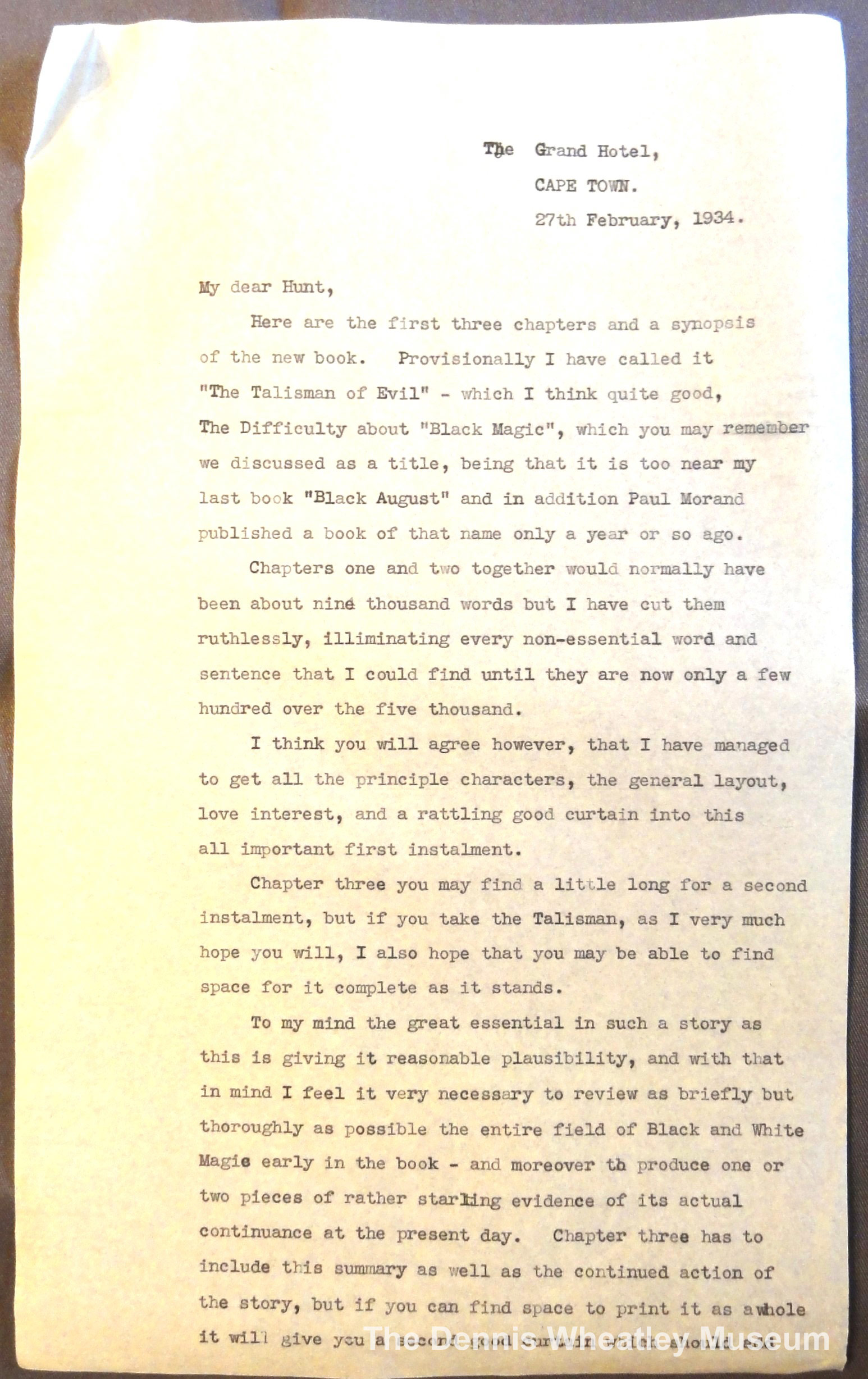
The opening page of one of DW’s letters to The Daily Mail from South Africa
Click on the image to enlarge
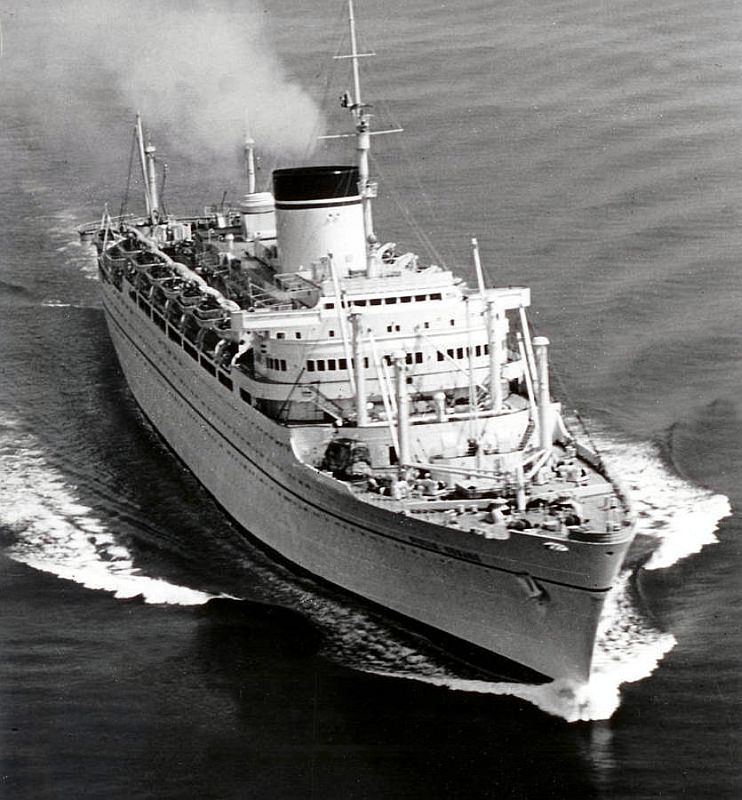
SS Giulio Cesare
Click on the image to enlarge
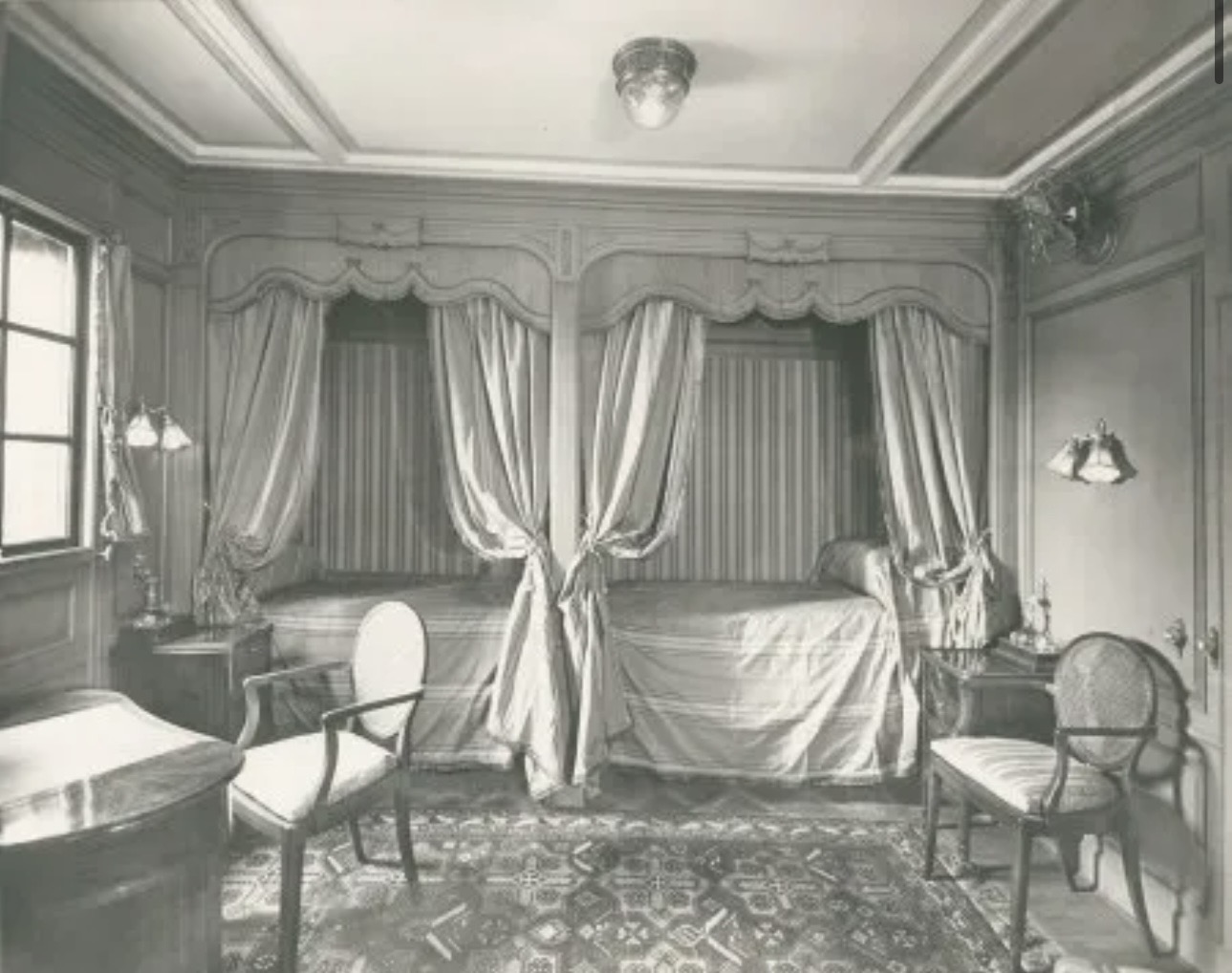
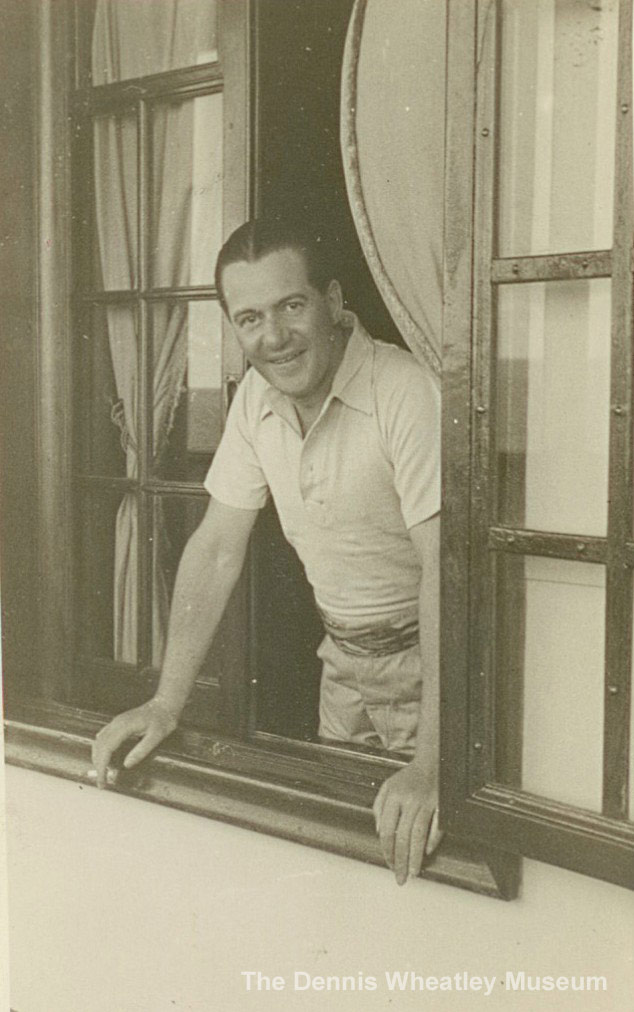
A typical state room, of the type where DW may have planned and started writing The Devil Rides Out, and a photo of DW looking out of his cabin window while on board
Click on the images to enlarge
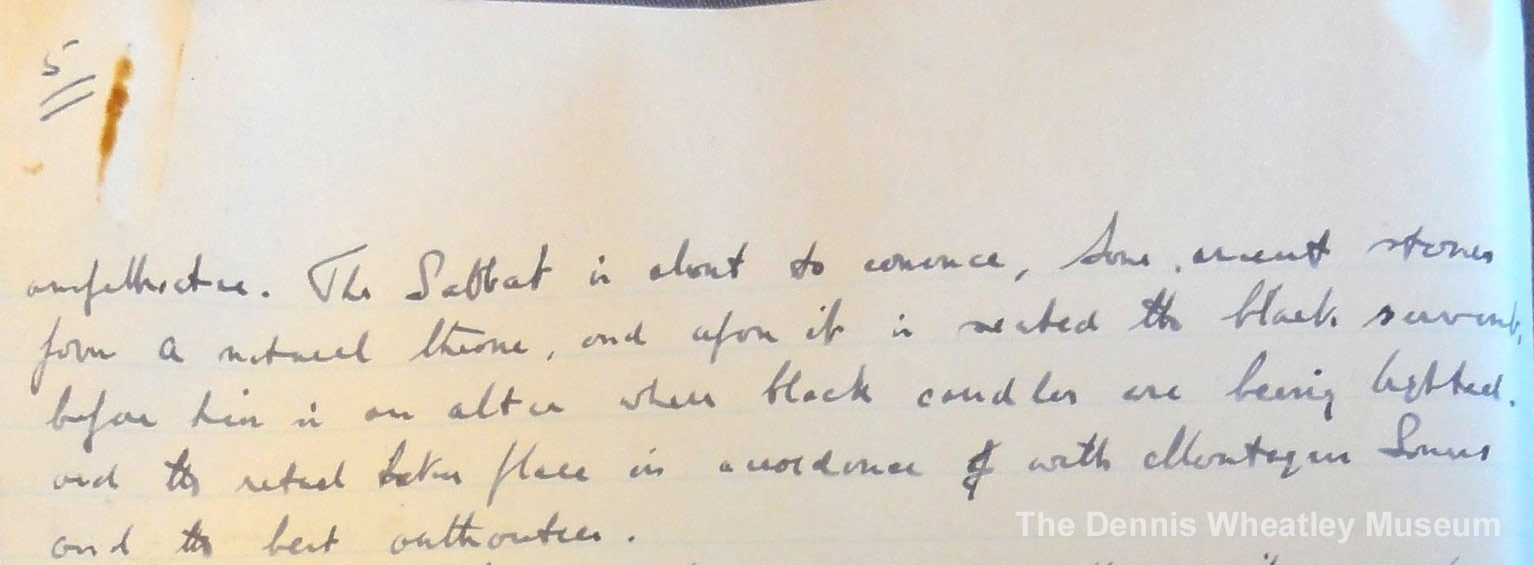
DW’s took on board books, including some by Montague Summers, which he consulted while writing on board.
For a transcript, click here
Click on the image to enlarge
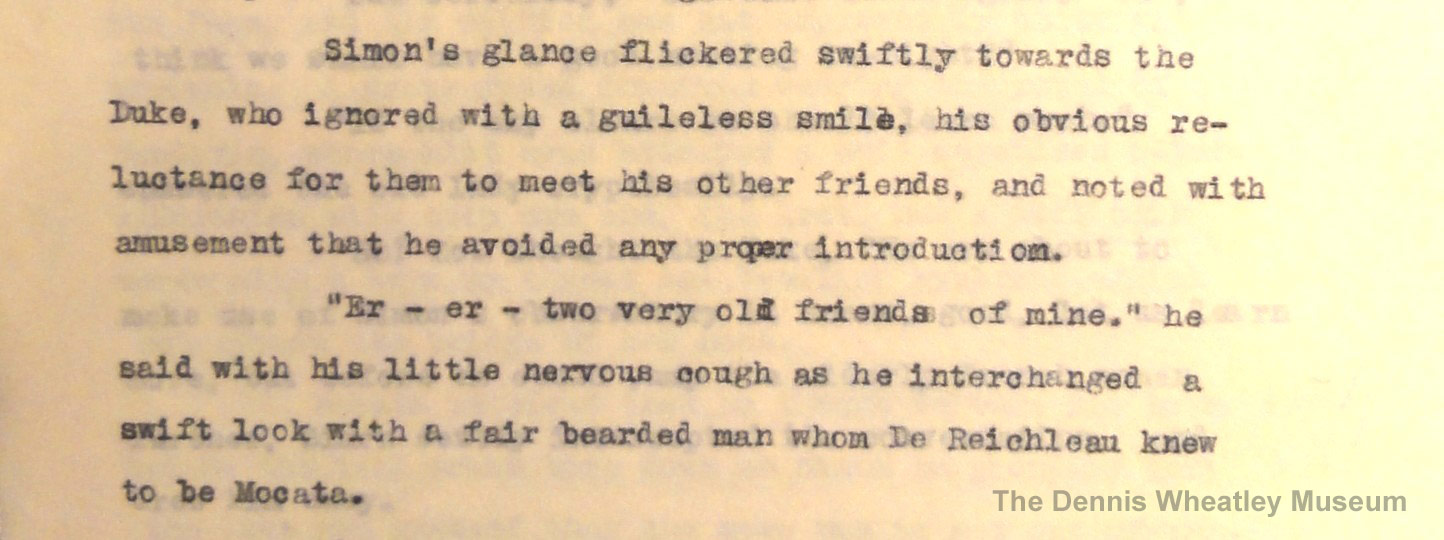
DW’s original description of Mocata
Click on the image to enlarge
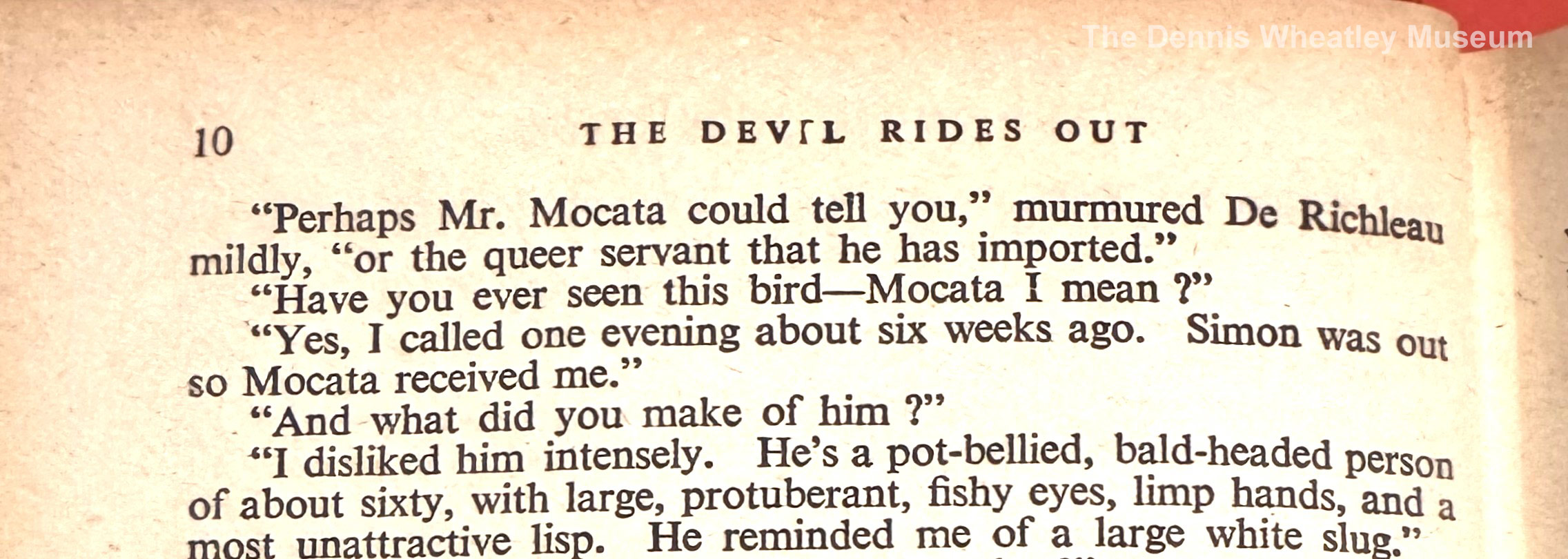
… and the published one are quite different
Click on the image to enlarge
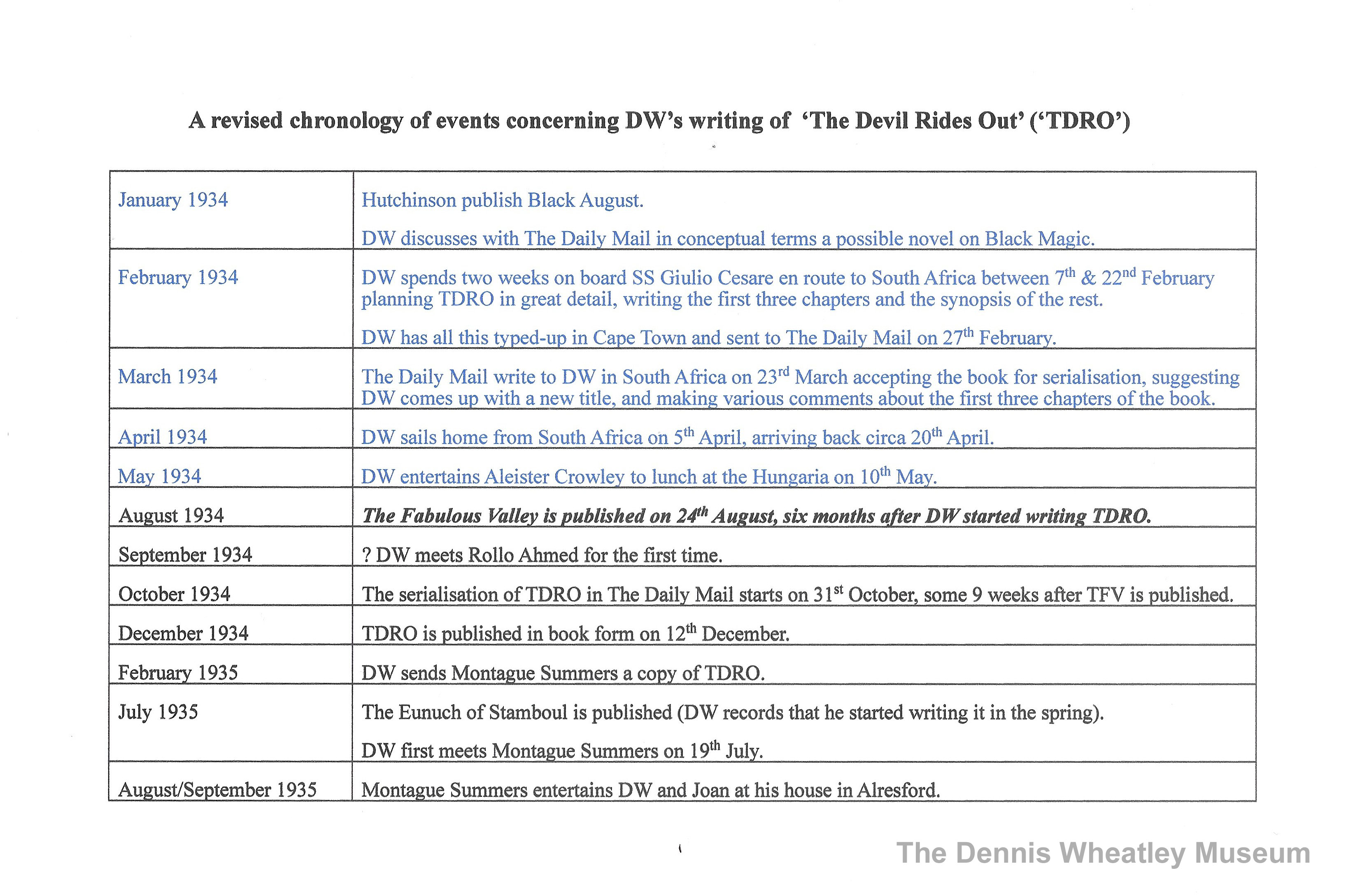
A revised chronology of DW’s writing of ‘The Devil Rides Out’
Click on the image to enlarge
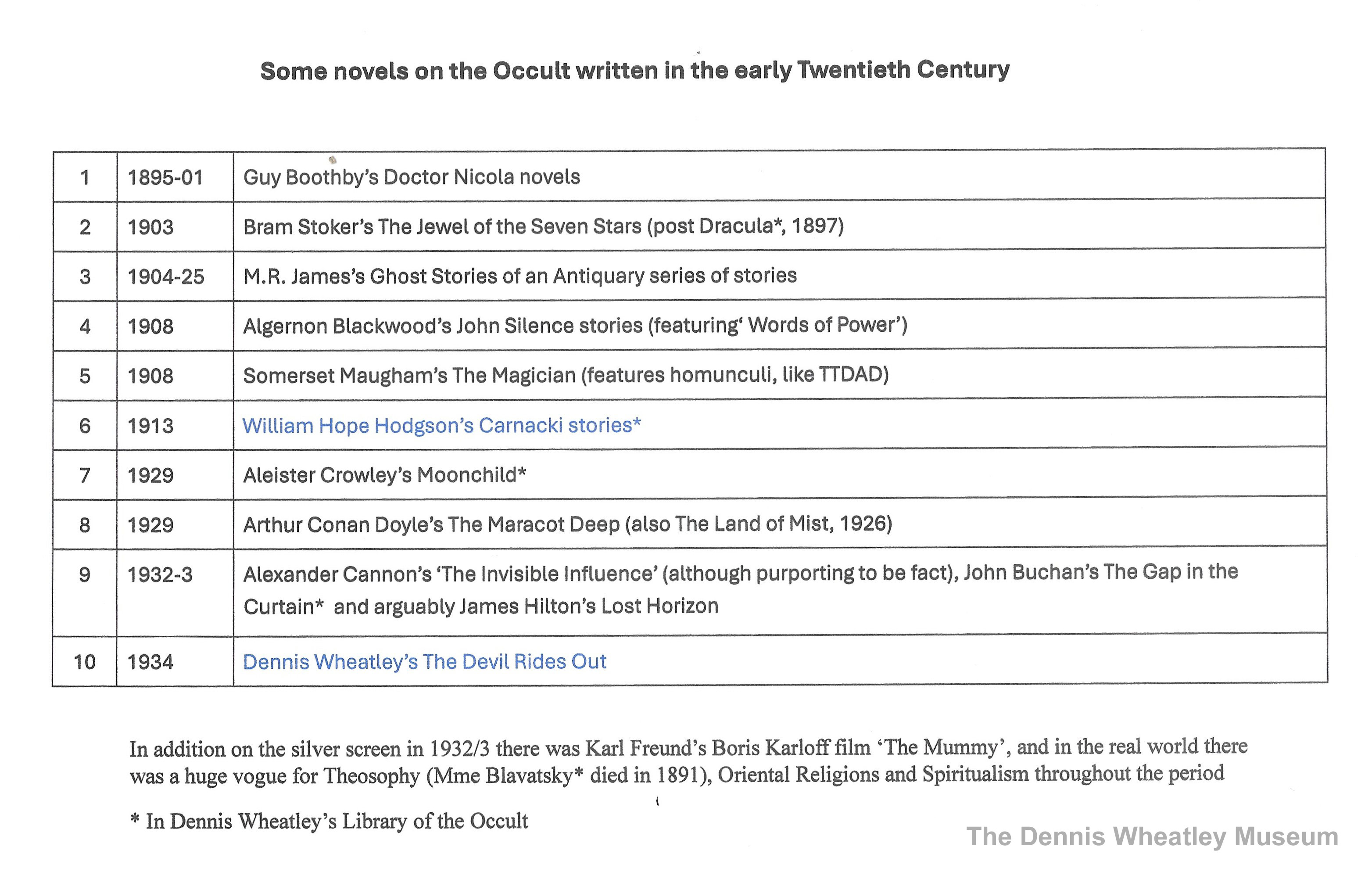
Some novels on the Occult written in the early Twentieth Century
Click on the image to enlarge
As mentioned in the Postscript to the Introduction, and as I discussed at the 19th Dennis Wheatley Convention in November 2026, a revision to our understanding of how and when DW researched and wrote 'The Devil Rides Out' is required.
The conventional wisdom – which is founded on DW's own published account of the writing of the book – is that on his return from South Africa in the spring of 1934, DW wrote 'The Fabulous Valley', and after this, he searched around for another topic. As nothing had been written about the occult for a while, he decided to write a book involving the subject and, interviewing authorities like Aleister Crowley and Montague Summers, he produced his authoritative and influential bestseller – which James Hilton described as "The best tale of its kind since Dracula."
However, the papers in DW's manuscript pack for the novel reveal a rather different story.
It transpires that DW was talking to The Daily Mail about the proposed book and its possible serialisation in the opening months of 1934 (in the event, The Daily Mail serialised it between 31st October and 22nd December 1934, and the book was published in book form on 12th December 1934), and DW wrote the entire synopsis* and the first three complete chapters while he was on board ship on the way to South Africa on 5th/22nd February that year, and not after he had left South Africa and written The Fabulous Valley.
DW had all this typed-up in Cape Town and sent to The Daily Mail for approval on 27th February, writing that if they approved it, he would write further complete chapters/instalments while he was in South Africa and on the boat home. The Daily Mail wrote to DW in South Africa on 23rd March 1934 accepting the book for serialisation and making various suggestions (including that he change the title) and DW sailed back from South Africa to England on 5th/20th April 1934.
When DW met Aleister Crowley on 10th May 1934 and Crowley presented him with his famous copy of 'Magick in Theory and Practice', the book was thus fully conceived and part fully-written, and we can see from the manuscript pack that as a result of their meeting DW changed his description of Mocata. Before the meeting, Mocata was a 'fair bearded man' (and as Charles detailed to the Convention, the description goes on to be even more explicit), whereas after the meeting, Mocata was changed to the "Pot-bellied, bald-headed person" that we all recognise.
It is unclear when DW first met Rollo Ahmed, but it was possibly in September 1934, six months after DW had sent his detailed plans to The Daily Mail for the serialisation.
DW met Montague Summers even later. He certainly consulted Summers' books when planning the novel – indeed in an early version of the manuscript he wrote that the Sabbat on Salisbury Plain was to take place "in accordance with Montague Summers and the best authorities", and we know that DW took a number of reference books on the occult with him on board the outgoing ship to assist in his writing, but DW did not get in contact with MS until after the book was published, when they had an intense correspondence** which started with DW sending Summers a copy of the book in early February 1935.
The two first met in July 1935, when the book had been in print for over six months, and the famous weekend that DW and his wife spent in Alresford did not take place until the August Bank Holiday weekend that same year. Both wrote to each other after the weekend, and neither mentions DW leaving early after concocting a story about a family emergency. That story is probably a fabrication.
Why DW's account in his autobiography is so different to the facts revealed by the manuscript pack is unclear. Certainly, the real chain of events is complicated. DW finished one story (Black August), started another (The Devil Rides Out) and had it accepted for serialisation, and then, before it was published, he started on and had published another (The Fabulous Valley).
Whatever the reasons, it cannot have hurt the book's sales for the public to have thought that DW consulted the major occultists of the day in person before he wrote his book; and DW certainly conduced diligent book research while writing the novel.
Aside from the publicity, the talk about meeting the occultists did have one side effect – it drew attention away from the novels on which DW drew heavily when writing his own novel – his debt to William Hope Hodgson in particular never being publicly recognised, although DW twice republished his work, in both cases writing glowing testimonials as to his abilities.
And while many of DW's Pentacle scenes were taken from Hope Hodgson, in other respects the book is deeply original, not least in its central theme – the search for the Talisman of Set. As far as I have been able to establish, it was DW himself who came up with the idea that when Isis re-assembled Osiris's dis-membered body, the fourteenth part (the phallus) was never found, and became a powerful magical talisman. Ancient Egyptian mythology was rather more prosaic. It was cast into the Nile and eaten by fishes.
C.B.
*And this synopsis is so detailed that even the makes and colours of the cars the satanists drove on their way to the Sabbat are fully documented.
**Four letters from DW to MS survive and are held by Georgetown University, and a little over twenty letters from MS to DW from the same period are in a private collection in England.
References: 'Drink and Ink' p 131.
Provenance of illustrations (other than pictures of MS Giulio Cesare): Private Collection

